Showing posts with label internet. Show all posts

Saturday, 2 March 2013

Smarter or Dumberer

To the ancients these would represent the four elements: Earth, Water, Wind and Fire.
To me they also represent the four states of matter: Solid, Liquid, Gas and Plasma.
The ancients classified all things by their elements and we can do likewise with the states of matter. Often there is the thought that we are more advanced and more intelligent than those in antiquity. We scoff at the things they believed, their theories of the world, because we know so much better.
I don't think that's the case. Our brains aren't much different than they've ever been, so our potential for creativity and intelligence aren't any greater than the ancients'. I think the difference is our access to shared knowledge. We've never relied on just our own brains to retain all the information necessary to our lives.
We started sharing knowledge with other people: elders, physicians, butchers, etc. We didn't have to know how to set bones or dismember a cow to survive any more. We didn't get dumber. We just turned our minds to new pursuits. Then came text: scrolls, books, the printing press. Our new knowledge could be collected, stored and referenced when needed. And we didn't get dumber. Now technology and the internet has increased the amount of, and our access to, shared knowledge exponentially. We won't get dumber. Our brains are adaptable and creative. Intelligence may look different after the internet revolution, but it will not decrease.
Our ancestors were smart - We are smart - Our descendants will be smart

Tuesday, 26 February 2013

Group Presentations

#BYOD
Presented by: Chantalle, Erin, Alaura, Carissa, Tiffany, Jocelyn
Read the backchannel discussion we had during this presentation.

Biggest Surprise: Our biggest task is going to be convincing administration that BYOD is a good idea.

- - -

The Internet: the good, the bad & the ugly
Jen, Micki, Lindsey, Tom and Nic

Biggest Surprise: Wikipedia is on the bad list?!?

- - -

US
Tyler, Jennifer, Lisa, Kelsey, Kirsten

Our website on How NOT to Steal from the Internet

Biggest Surprise: The internet loading and then not showing pictures.

- - -

Filtering
Anna, Jen, Brooke


Biggest Surprise: That filters got so many votes in the poll.

- - -

Cyber-Bullying
Steve, Scott, Adrienne, Stephanie, Sarah

Biggest Surprise: That snow falls upwards in Punta Cana.

Web-Based Courses

Last week Donald Girouard & Sophia Palahicky gave my Internet for Educators course an overview of Web Based Courses.
Check out Manitoba Education's webpage for information, since this post will be primarily be reflection.

In high school I took Grade 11 Pre-Calculus online. I must have been on the cutting edge of change, considering I graduated 10 years ago. There were modules to read through, weekly assignments to complete, online, timed tests and a final exam. Thinking back I think the assignments and tests were based on web forms: I could click the appropriate bubble in a multiple choice or fill in text box. I don't think it was the best option for me. Not having a living person to be accountable to, and remind me of when things were do, I did a large percentage of the reading and work last minute. Compounding this was the fact that homework assignments were out of five, so a small error on one of the questions could cost you 20% on the assignment. I don't remember communicating with the instructor or fellow students very much, if I did at all. The final exam was in person, in my school division office no less! I got a final grade of 72% in this course and am still sketchy on some aspects of the geometry of circles. I feel I would have achieved better if I had been in  the face-to-face option of this class, though I think it conflicted with another course I was taking, considering I got 99% next year in Grade 12 Pre-Calculus.

However, web based courses are much different now! Here's a run down on the types of courses offered in Manitoba on an interactivity scale.


There is much more technology available to bring teacher and peer interaction into online courses. IITV utilizes audio/video conferencing. Skype and Google Hangouts enable students to connect with each other outside of school. I could go on and on.

Some key points from the presentation that highlight the changes in WBCs since my day:


  • New WBCs are designed for interaction.
    • Journalling, discussions, blogs, wikis, chat,...
  • Written for students.
  • Predominately asynchronous, but can be synchronous, say using a tutoring session.
  • Teachers have designer access to the courses.

I'm excited about the ability to modify and/or add to the courses. Knowing that all students, and therefore all classrooms, are unique, having the ability to tweak a course to fit your students' needs is very beneficial.

Web based and distance learning courses are used for many reasons. We brainstormed some as a class during the presentation:


  • Small schools can combine to offer courses they would not 
  • Help for students with extended absences.
  • When f2f courses are in the same slot.
  • University entrance course that may not be offered f2f.
  • Credit Recovery.


Take Aways


  • An asynchronous course must have an accompanying f2f time slot. You cannot be given a full teaching schedule, plus a WBC.
  • WBC will NOT replace teachers. (I was unable to take German in high school, because of low enrollment. Therefore no teacher was payed to teach it. If interested students could take it via the web, it would be a job created for a teacher!)
  • Have to update the courses as internet standards are updated: HTML5, Mobile,...
  • We can have access to WBCs as a resource to use in our f2f classes!
  • Communication is key. Call students. Visit their school. Use available web 2.0 tools.

Doodle Notes: Internet

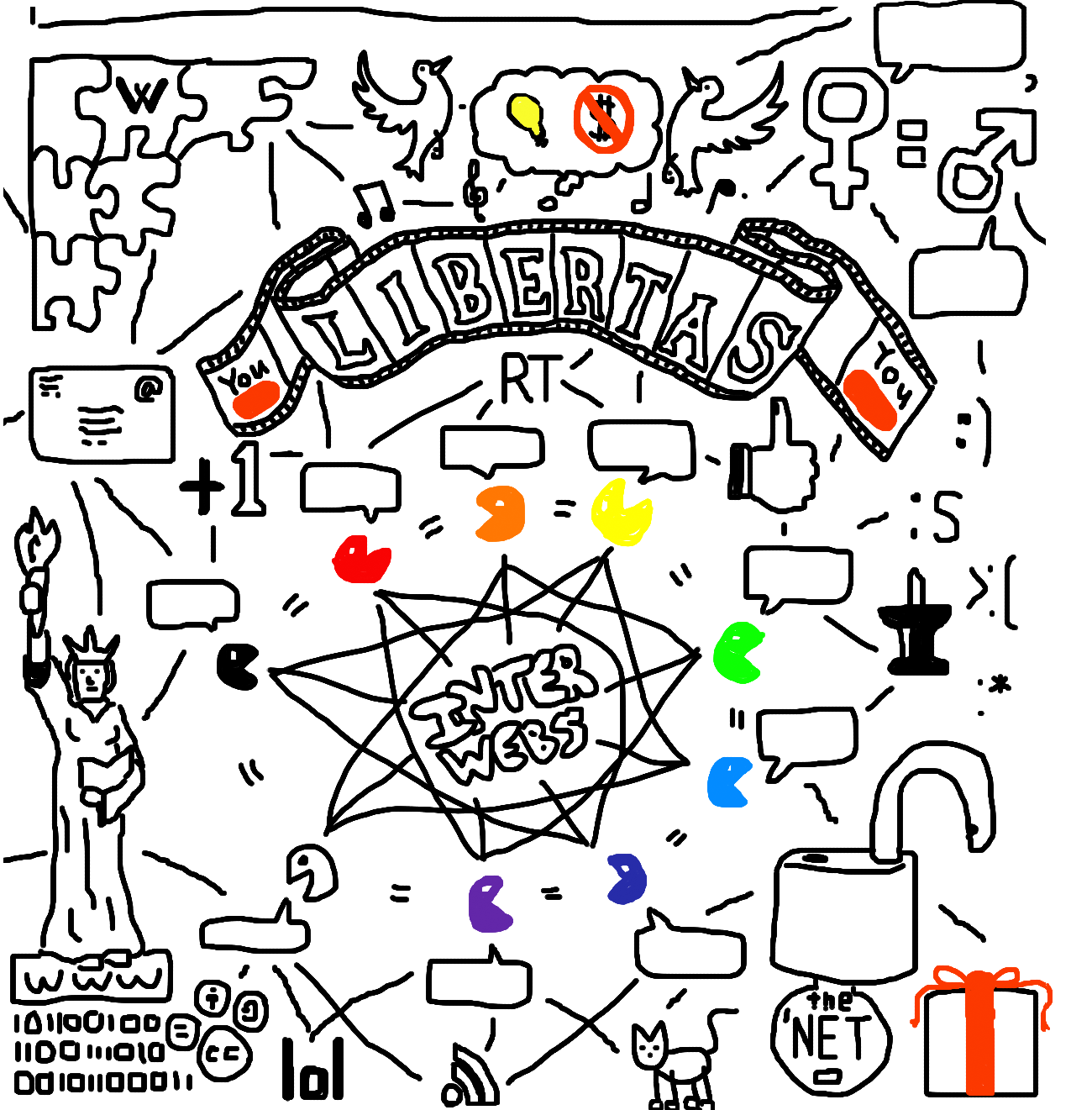
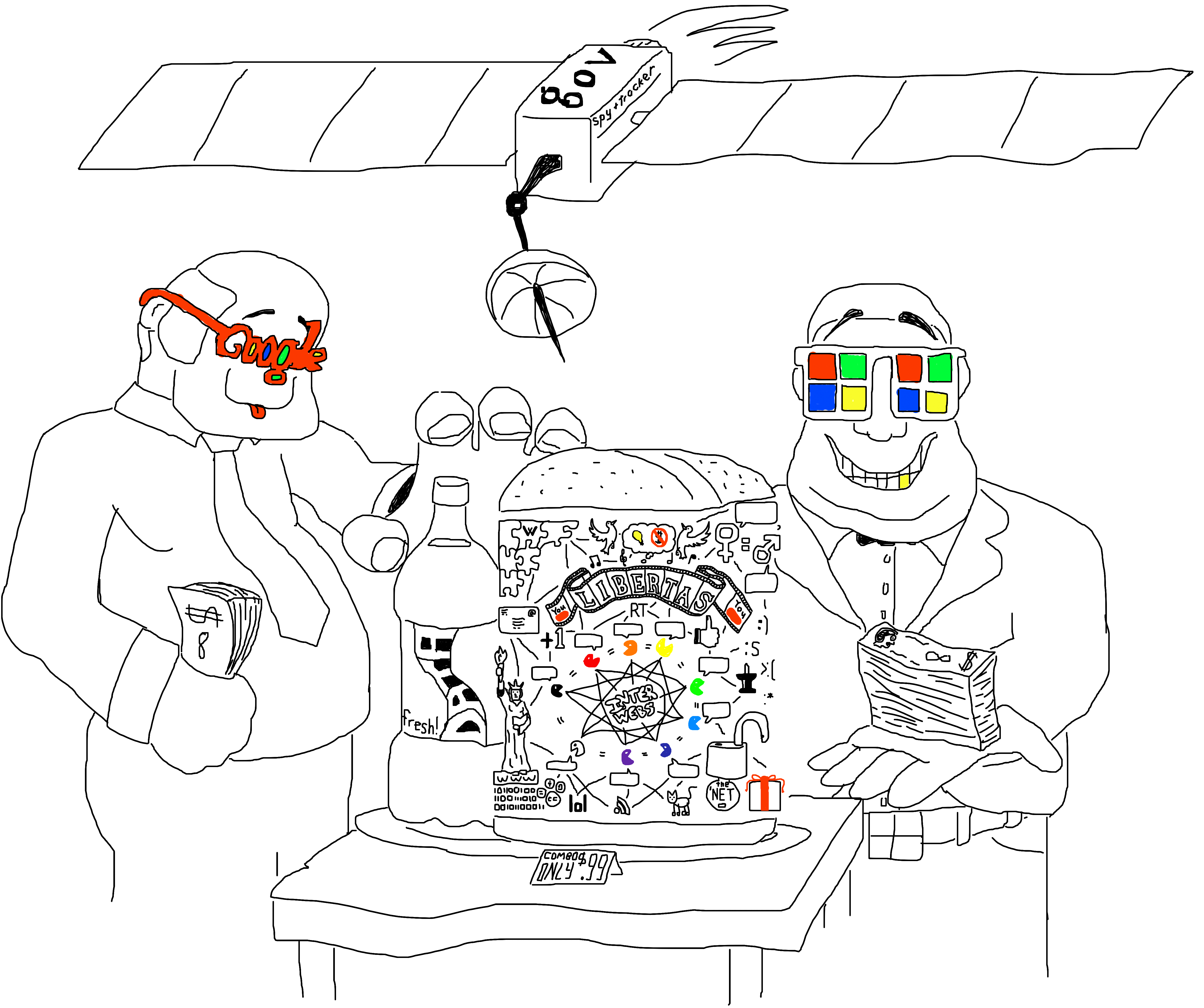
A week ago we had a discussion about the nature of the internet. Is it democratic or oppressive? Freeing or confining? There are arguments for and against both sides. 

Here are some of the things we talked about as pictures:
doodle, internet, free internet, open internet,
The democratic, open and free aspect of the internet.
doodle, big brother, internet,
The regulated, monitored, and monetized aspect of the internet.

Saturday, 9 February 2013

Thursday, 31 January 2013

Doodle-Notes: John Finch

I am a very visual person and have started putting this into practice when I take notes in class. When I convert something into a picture or graphic I am able to remember it much better. Here are my notes from John Finch's talk with us this week.

Friday, 25 January 2013

The Power of the Internet

Alec's about.me page.
This week Dr. Alec Couros { @courosa } shared with our class using adobe connect. I'm a fair hand at skype, but simultaneous video, audio, chat, presentation is awesome, even if the audio crashes every few minutes.
Alec started with talking about.me. About.me provides a place to unify your online presence with a bio blurb and links to all your online spaces. As someone with a growing digital footprint I think this is great. It's like an iBusinessCard. Give your about.me page to someone and they have all the ways to connect with you! I've made one for myself and have started using as my default URL/website for any service that asks what mine is.

Alec presented the power of the internet in five categories and gave us some tips to get started.

tools
Our tools keep changing. Smart phones have become the norm. (I guess this means I'm abnormal?) One just has to take a quick peak through her or his facebook feed to see that everyone is highly connected and sharing everything, seriously, EVERYTHING! Yet schools are a few tech generations behind and most force students to disconnect from their personal tools when at school. Alec said that the share button has changed everything and I agree. If we don't acknowledge this we do our students a disservice. We need to teach what TMI is if we don't want TMI.

content
The internet is open, well at least for now, ulp, and education is moving that way. If everyone can access information, why not make instruction available to everyone too! This the idea behind massive, open, online courses, henceforth MOOC. Places like coursera and edX offer many MOOCs to anyone interested. Alec is also involved with #ETMOOC, an education technology MOOC. I've joined and am enjoying it so far. I haven't been in sync with the synchronous sessions yet, but I've made use of the archives and have already made some valuable connections!

networks
The internet is a inter-connected network of computers, but it's real power is the networks of people that inhabit it. Sites like tripadvisor, urbanspoon, and couchsurfing allow people to help people in new ways. My friend introduced my wife and I to couch surfing and we found it invaluable in our travels around Australia.
Alec also mentioned crowd sourcing - getting many people to work together on small parts of a large project.
Like:

These projects are incredibly fun! I'm currently involved in two:
Star Wars Uncut is getting fans to remake Empire Strikes Back 15 seconds at a time.


#ETMOOC lip dub of Queen's Don't Stop Me Now. 
Screen shot of my line - "I'm havin' a good time!"
These are great ways to collaborate and have so much potential to use with our students. My friend Miss L came up with some great ideas for using these with our students. Those got me thinking and I've come up with a few of my own:

  • A lip dub of Martin Luther King Jr's "I have a dream" speech as a History project.
  • A collaborative final project for pen pal or skype pal classes.


new possibilities
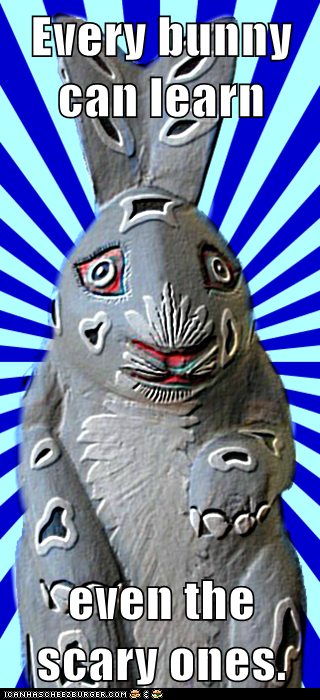
Alec talked to us about an internet phenomenon - memes. I love that memes are defined as idea viruses. Most people know them as funny, or almost funny, pictures with captions, but we can use even these with our students. They can use them to learn from and to show their learning. They can be social commentary, like the pepperspray cop meme.
Alec told us about know your meme, a site where the latest and greatest memes are tracked. This allows us to keep up with the pulse of the internet and bring current content into our classrooms.
I like memes and I like to make stuff, so I decided to participate in meme-dom. I've made a cheezburger site - Memes for Learning where I'll store the memes I've made and archive ones I think will be useful to educators. Maybe one day you'll see one of my memes features on know your meme?

activism
The internet has enabled everyone to have a voice and to use their voice for change. We can stand up for what we believe in and have people take notice.
Alec talked about Martha Payne, a blogger who turned her commentary on terrible school cafeteria food into helping provide meals for schools in need. There are also websites, like kiva, that allow those with more to give a leg up to those with less.

where to start

  1. Embrace new communication tools (appropriately).
  2. Experiment with new forms of expression. Focus on how students can learn from them.
  3. Teach (and MODEL) Digital Citizenship
  4. Find hashtags about what I like and connect with people. Cybrary Man has a list to start us off.
  5. Make learning visible.

I'll end with a few good quotes Alec shared with us.
"It is no longer enough to do powerful work if no one sees it." Chris Lehmann
"Don't limit a child to your own learning, for he was born in another time." Tagore